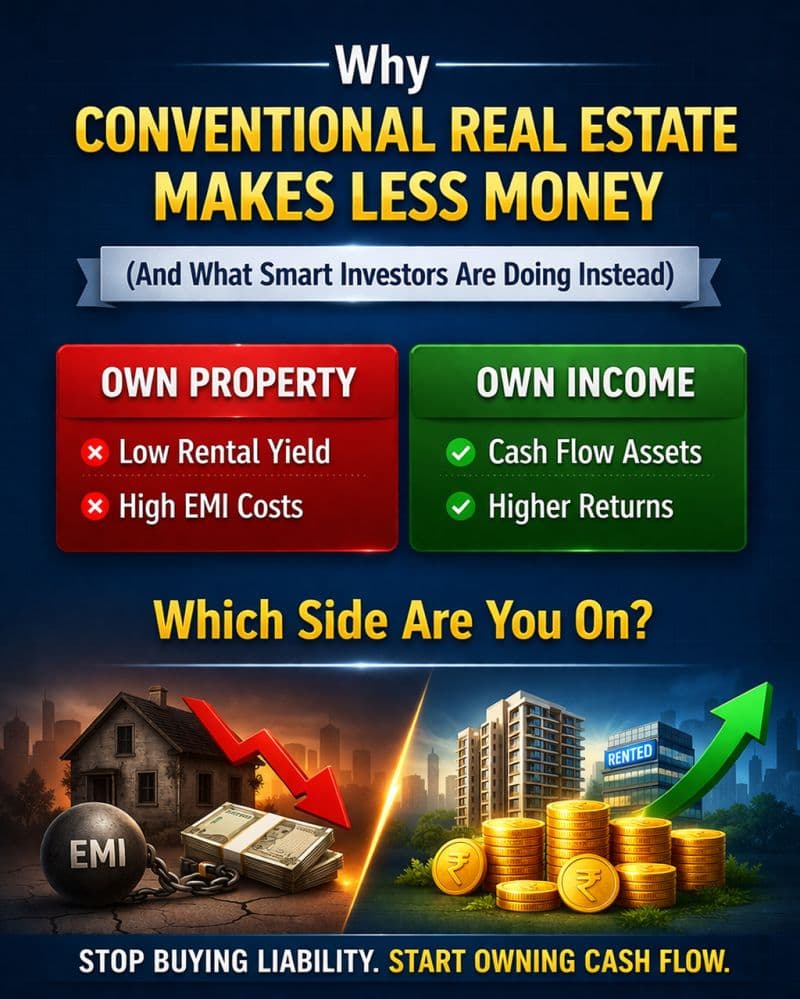
Why Conventional Real Estate Makes Less Money
Buy and hold was supposed to be foolproof. But low yields and locked capital tell a different story — and it is pushing smart investors towards income-generating real estate.
Key Takeaways
- A typical ₹1 crore apartment yields just 2–3% — locking up huge capital for thin, slow returns.
- While the money sits idle, EMIs and rising maintenance quietly eat into whatever return the asset produces.
- Conventional 'buy and hold' is a low-yield, high-capital, patience-heavy strategy in disguise.
- Income-generating real estate flips the model: cash flow starts early and returns no longer hinge on appreciation.
For years, we have all heard the same comforting lines: real estate never fails, you should just buy property and hold, prices always go up in the end. These ideas are repeated so often they have become a kind of financial folklore — rarely questioned, almost never tested against the actual numbers.
So let us be honest for a moment and do exactly that.
The Numbers Tell a Different Story
Here is what a typical ₹1 crore apartment really delivers in most Indian cities today:
| Metric | ₹1 crore apartment |
|---|---|
| Monthly rent | ₹25,000–30,000 |
| Rental yield | ~2–3% |
| Capital locked | ₹1 crore |
| Ongoing costs | EMI + rising maintenance |
A 2–3% yield is the kind of return a savings instrument can match with none of the hassle. So ask yourself the honest question: is owning that apartment really investing, or is it just parking a very large sum of money and hoping? Because while the capital sits locked away, the costs never sleep:
- The EMI keeps draining cash flow month after month, often exceeding the rent.
- Maintenance keeps increasing as the building ages, quietly eroding the net yield.
- Returns stay weak, leaving you dependent entirely on price appreciation that may or may not arrive.
The Hidden Costs Nobody Mentions
The brochure yield is generous fiction. Strip out property tax, society charges, periodic repairs, brokerage on re-letting, and the inevitable vacant months between tenants, and the real, in-pocket return on a conventional apartment often slips below even that modest 2–3%. The headline number and the lived experience are two very different things.
The Uncomfortable Truth
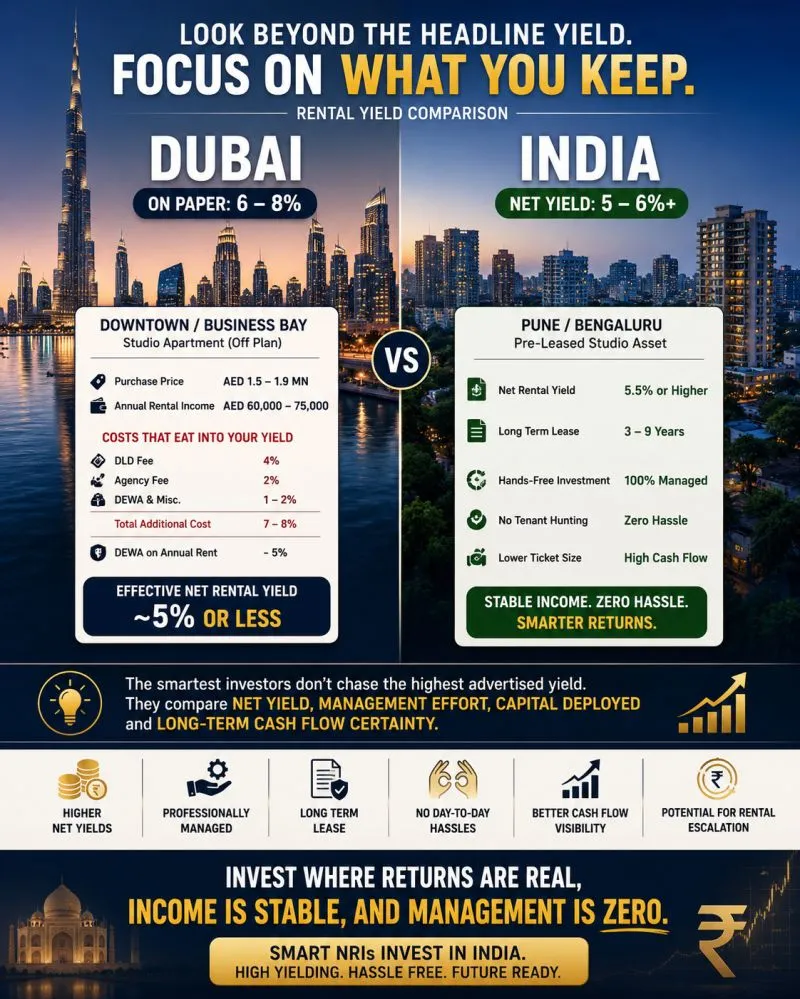
Conventional real estate, stripped of the folklore, is a low-yield, high-capital, patience-heavy asset. It can still appreciate — but you pay dearly in idle capital and weak cash flow for the privilege of waiting. That is precisely why smart investors are shifting. Not away from real estate altogether, but toward income-generating real estate, where the model is fundamentally different:
- Cash flow starts early, often from the first month, rather than years down the line.
- Yield is meaningful — high enough to service debt and still leave a surplus.
- Dependency on appreciation reduces, so your return no longer rests on a single uncertain bet.
This is where alternate real estate is quietly changing the game — turning property from a place you store money into an asset that actually pays you to own it.